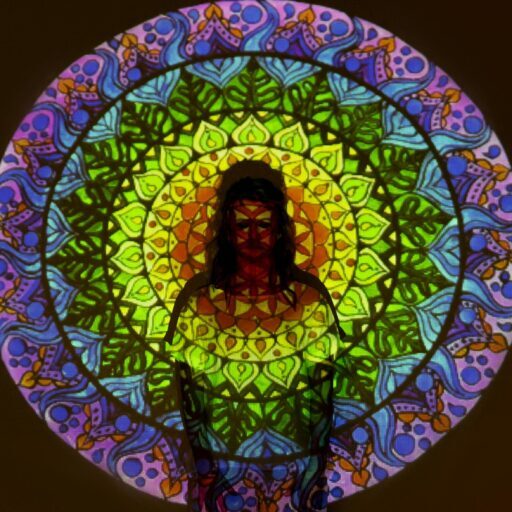

INDIGENOUS PSYCHOLOGY is a movement that began after the Second World War but gained momentum by the 1970s due to the rising need for decolonization of psychology and its therapeutic applications. The need for recognizing the socio-cultural context was increasingly felt. Many social scientists from different parts of the world had been and still are part of this movement.
In 2010, a paper by Henrich et al. coined the term WEIRD to describe a lack of diversity in academic research. WEIRD stands for WESTERN, EDUCATED, INDUSTRIALIZED, RICH and DEMOCRATIC. This acronym aims to raise people’s consciousness about psychological differences and to emphasize that WEIRD people are rather one unusual slice of humanity’s cultural diversity.
In the devouring era of consumerism, “growth” and “happiness” gets increasingly dictated by the West. Even the parameters of evaluation of one’s lifestyle, health, wellness, world-views everything seems to ape and follow a single rule book coming out from this WEIRD part of the world.
But if we stop narrowing our understanding of psychology to the one that developed in Europe around the end of the 19th century (to the one that we currently call “modern science”), we unearth the rich knowledge of folk/ indigenous/ ancient psychology. We are at once humbled by their brilliance and the keen insight that they provide into the human mind and its evolution.
What is even more relevant to our current scenario of rising mental unrest, is the kind of openness that such alternative narratives of psychological understanding offer. They could help us identify the many selves in us and accept them as not mere fragments but as reflection of the diversity that exists in the Universe. They could help us see ourselves in the “connectedness” with Universal Existence and not as an isolated entity who is constantly struggling against adversities. Instead of seeing life as an uncertain battle ground in which one has to keep feeding the ego with endless gratifications, life becomes an opportunity for widening of the ego into the Universal and the Eternal archetypes.
Such a widening of ego becomes a natural outcome when one willingly starts to divert one’s attention from the superficial drama of the outside world, lives more mindfully, brings more stillness in attitude and strives to elevate one’s consciousness.
As would be obvious to most of us, the journey of such self evolution can neither be smooth nor simple. It also seems to be totally distant from a modern urban reality, from our daily life that is constantly bombarded with lures of consumerism and reeks of over-exploitation. Yet to be in denial of the true path of self evolution, could ultimately result in an even greater psychological crisis and would leave us with no ammunition to combat the disastrous force of mental colonization.
Currently there is a rampant spread of a WESTERN UNIVERSALISM. The trouble with such a format of universalism is not just about losing the magnificent diversity of human life, but also about becoming mental dwarfs in a world in which a well “designed” unity is forced from outside.
The trouble gets aggravated further by the fact that the force of such aggressive cultural imperialism through technology and media is hard to recognize at the initial stage. Realization dawns much later when we find our spontaneity and individuality at stake and when our true self decides to rage a war against our disharmonious existence. We are shaken up from our stupor by feelings of unrest or ill-health. We start questioning our strange reality in which our desires constantly take away our groundedness. We seem to be caught in a mesh of unknown emotions and random thoughts.
As we all know, the latest ammunition from the house of technology is the most astounding thing called ARTIFICIAL INTELLIGENCE. The reason why it is an ammunition is because it has the power to bring an unprecedented influence on the human mind. And since the control of technology and science are right now in the hands of financially and politically powerful people, it can become a tool for colonizing our minds further. It can become a mammoth force of mind-control and cultural homogenization.
So, we are faced with a double challenge. Not only is our mind trying to make sense of this new technology-driven reality, the psychological resources currently available to us are limited in their scope and vision. What we study as psychology today has emerged out of a very small geographical area (in the West) and has taken into account the realities of a very small section of people who are termed as “WEIRD”.
Most therapy approaches are based on Western psychology. While many countries do have practitioners of indigenous healing practices, they are often not considered mainstream. This bias of psychology could lead to more damage than good in the long-term as this adds to the already existing compelling narrative of a Western Universalism.
From this perspective, indigenous psychology is not just about mental health, it is about decolonization of mind. It is about reclaiming our individual creative freedom, which is essentially our birth-right as human beings. It is a clarion call against the demonic forces of domination and arrogance emerging out of a rather superficial and consumerism-driven existence.
However, indigenous psychology does not discard the current modern psychology. Rather it feels that what is essential is acceptance of other systems as valid.