A Sufi Folktale
Once there lived a very wealthy merchant who had a huge fleet of ships. He belonged to a noble family and was one of the most respected men in the city. Due to his expanding fame and riches, he soon became close friends with the king of the city and then ended-up marrying his daughter. Life could not have been better for him!
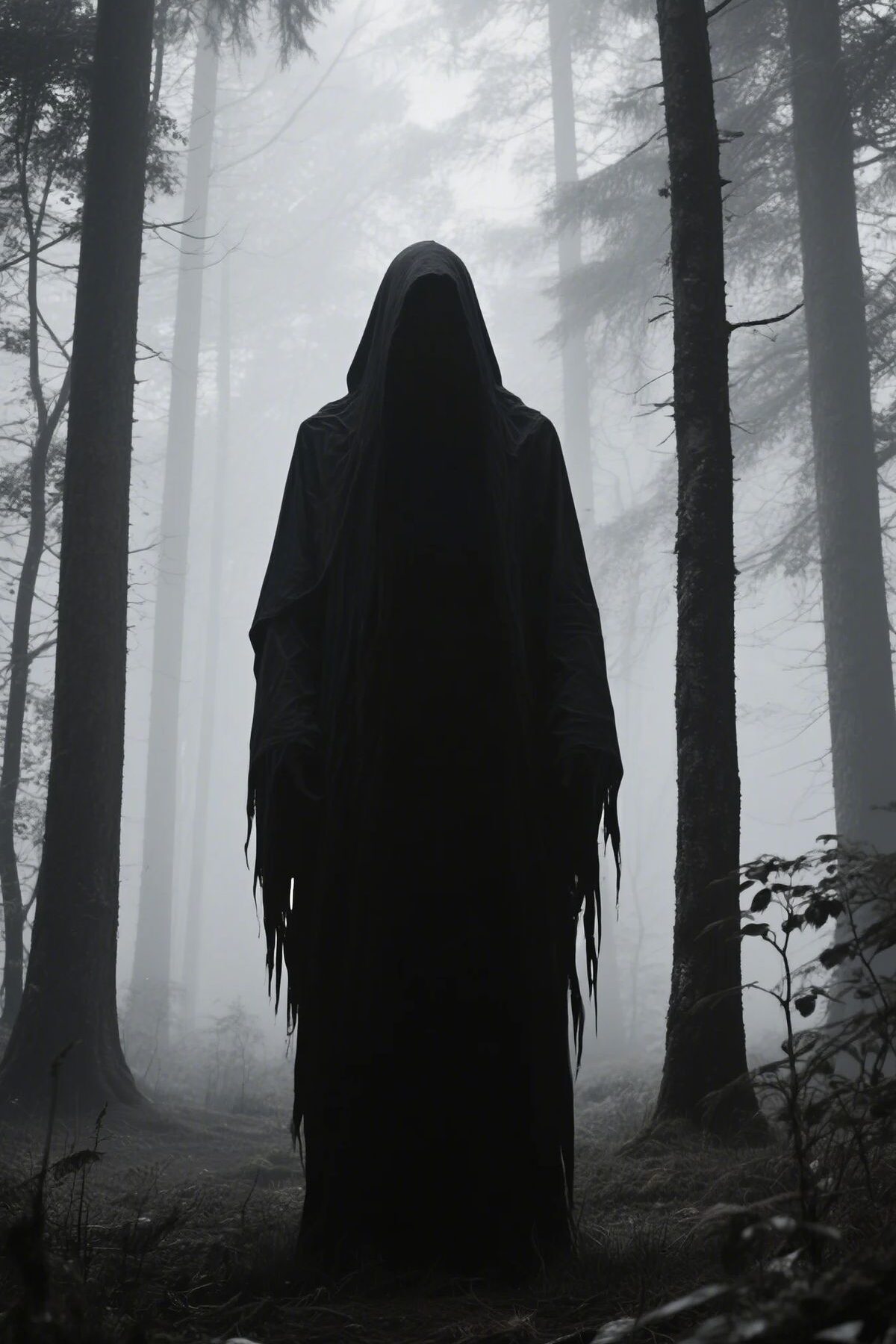
One day, he was walking in his rose garden, smelling one particularly beautiful bloom, when he heard a voice calling his name. He turned, and saw a tall shrouded figure standing under a tree.
“Who are you!” asked the merchant.
“I am the Angel of Death,” said the shrouded figure, “And I have come to take you to Paradise. You must come with me now.”
“Oh, no, no, I cannot come with you,” said the merchant, “I am not ready to go now. I have a fine rich life, everything I need, the king’s daughter for my wife. Please spare me, let me enjoy the good things of this wonderful world a little longer.”
“You must come with me. I cannot waste my time arguing with you on this matter,” said the Angel of Death.
Then the merchant thought of a crafty plan…
“I am not prepared,” he said. “Let me go to the mosque, and say my prayers, then I will come with you willingly.”
“Are you giving me your word? Is that a promise?” asked the Angel.
“Yes I promise,” replied the merchant.
The Angel of Death vanished and the merchant laughed aloud.
And from that day the merchant never went near a mosque.
Years passed and the merchant became even more important in status in his city.
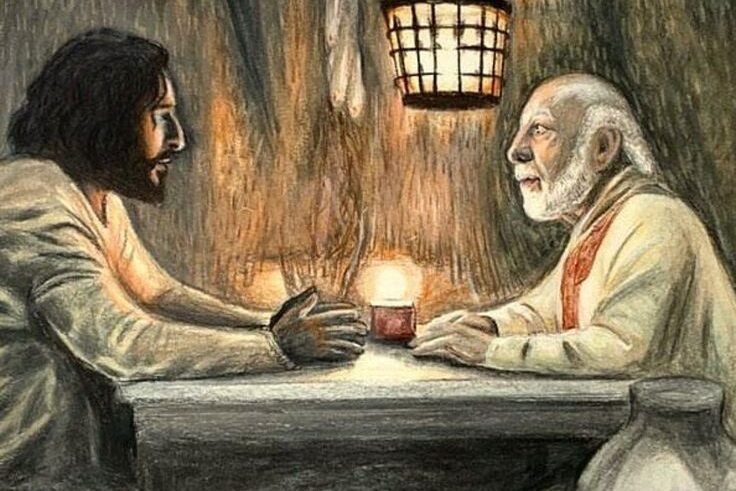
Then one day the King called the merchant and said, “The religious teacher of our Central Mosque has passed away this morning. I can think of no one more suitable than yourself to take his place. Come, let us go together. Today is a Friday and you shall lead the prayer at midday.”
“No, No, Your Majesty!” said the merchant in anguish, “I…I am not worthy, please choose someone else. Choose anyone but me.”
The King smiled and replied, “I am now even more confident that it shall be you. Such modesty is a mark of a sincere soul. Let us hurry, for it is nearly twelve.”
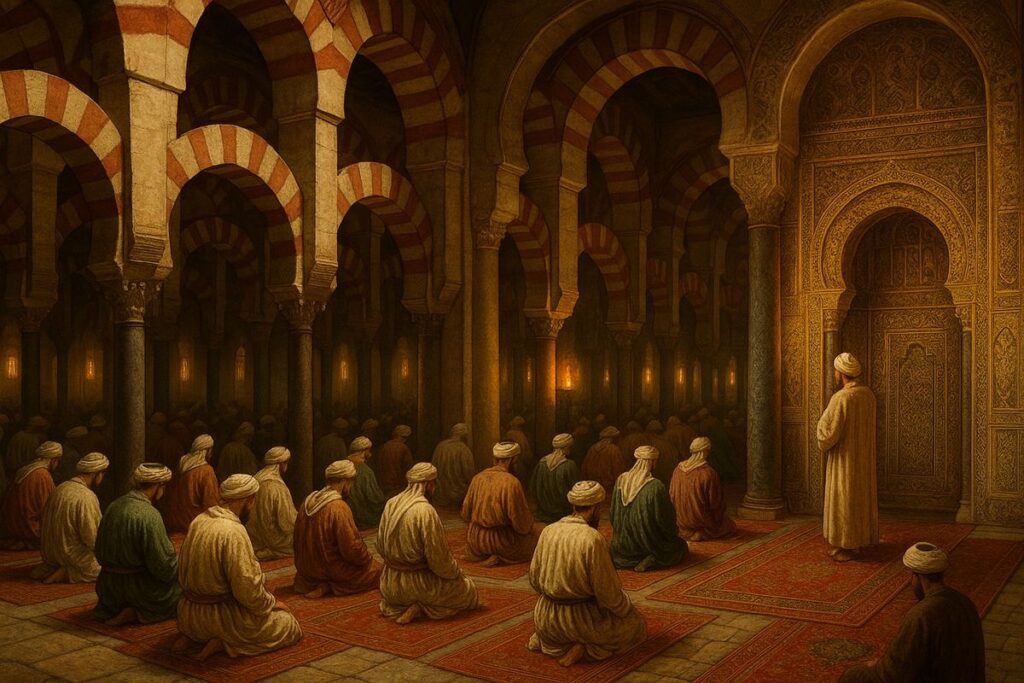
Attended by the courtiers, the king and the merchant walked towards the Central Mosque. They reached the mosque and the prayer started. As the prayer got over, the Angel of Death appeared to the merchant, unseen by the rest.
“Come with me now,” said the Angel, “I have waited a long time for you.”
“Very well,” he said, “now I am happy to see you. Now I will go with you to Paradise.”
“No not so,” said the Angel. “I am NOT HERE to take you to Paradise. I came before to do so, but you tricked me, remember, and now that opportunity is gone. You are to be sent to the lower regions, for you have had your paradise on Earth.”
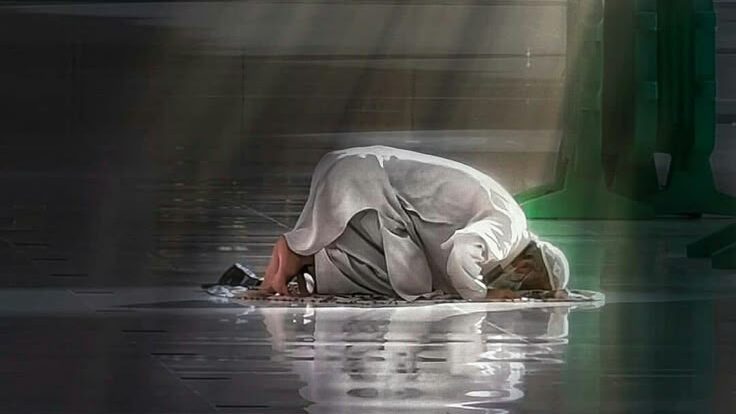
Before the merchant could utter a cry the Angel of Death embraced him in its chilly arms and bore him away, leaving upon the marble floor a lifeless figure, clad in a priceless robe, kneeling as if in prayer.
***
Death has been seen as the greatest truth of life by many mystics, poets and philosophers. To live fully conscious of its inevitability yet be fearless is perhaps the greatest challenge given to us.
Tagore had beautifully expressed this deep cosmic co-existence of life and death in a song as: “It is death that rows the boat of life.”
Here in the story, the merchant was so engrossed in his “comfortable” life, that he had completely lost touch with the Truth of Death. He even thought that he could cheat Death. Due to this stupid illusion, when the moment of Truth really arrived, he was denied Paradise which was originally ordained for him. It is for his “death-defying” arrogance, that an assured Heaven was taken away from him and his soul was cast into the Darkness of Universal Inertia (called Hell).
Most of our psychological issues are inherently linked with our relationship with death. It appears to us as the most fearsome and utterly sad incident. It is at that moment when we become truly helpless, all control goes away. With our physical body, our limited sense of identity is gone. It is this uncertainty, this dread of the unknown that keeps us from engaging with even the concept of death.
In Mahabharata, we see the God of Death (who is also called the God of Dharma) asked Yudhisthira (the crown prince), “What is the biggest surprise in the world?” In reply, Yudhisthira said: “Every day numerous living entities are dying and going to the abode of Death. Yet those who remain here hope to stay here forever. What could be a bigger surprise than that?”
The meaning is that the death of whoever is born is inevitable and everyone should be “PRESENT” for the realization of that death. But every person is lost in the business of life in such a way that death will not bring him in its grasp.
In this Sufi story, we see, even when the merchant had the chance of going to Paradise, he chose his attachments. He lived ignorantly, believing that he had cheated death. Paradise was his, but his own desire forbade him to take it.
Paradise is the assured destiny of human beings. We are all progressing towards that. In our consciousness, as a part of our evolution. But to truely take part in this progress we have to open ourselves and sincerely wake up to the Truth of Death. Death comes not as an end to our life but to renew us for our ultimate journey towards Paradise. It is a friend that helps us shed our limited sense of self.
Our small “ego”, our unevolved mind, wants to hold on to the limited world around us. But it is our heart that has wings. Connecting to our deeper heart in silence, probably, is the first psychological healing that we need. This deeper heart can then fortify our inner self and make us fully present. And if we are fully present, then we will truely “know”. We will stop cheating ourselves. We will stop denying ourselves the truth – of life and of death.