

An Indian Folktale
One evening, a merchant was locking the doors of his shop. Suddenly, a young man sprang up from behind and snatched the bag he was holding in his hand that contained the day’s collection from his business.
The merchant as well as some passers-by chased the thief and managed to catch him.
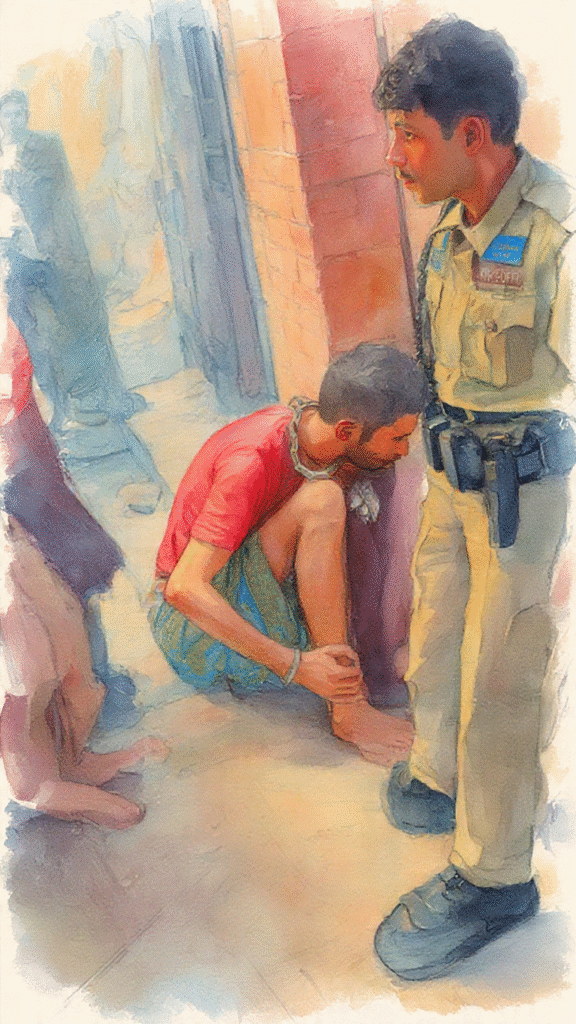
He was dragged to the Police station. The young man who was the thief saw that the Police Chief was sitting and having tea in front of the Police station. The thief did not wait for a second and threw himself at the feet of the Chief and started begging for mercy.
But the arrogant officer gave him a hard kick. He was flung away. The thief was prompt at not letting the opportunity slip away. He jumped up and ran.
He was given a hot chase by the Police Sepoys. By then it was quite dark. He changed his direction several times, successfully evading his pursuers.
He soon left the town behind and headed towards a forest. But before he could enter the forest, he heard the sound of heavy footsteps behind him and he knew he was still being chased.
On one side of the road was a small hill with a cave. A ray of light from the cave fell on the road. The young man tried his best to reach it, but exhausted, he fell down on the side of the road and fainted. The sepoys passed by his unconscious body as the side of the road was too dark for the sepoys to see anything.
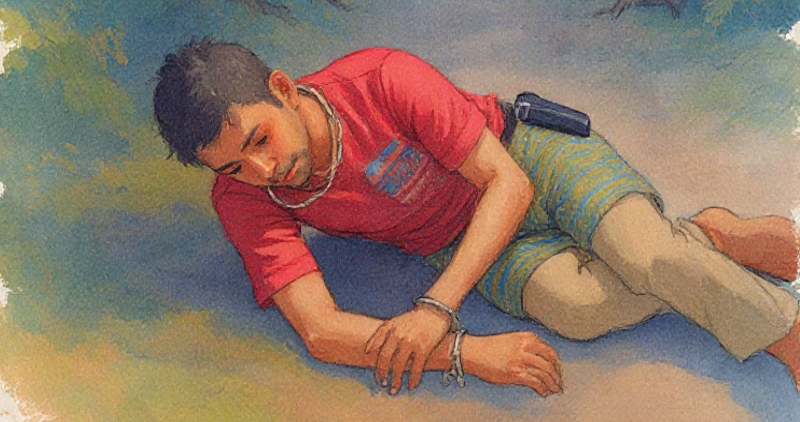
A hermit lived in the cave on the hill. He came out of his cave after some time and carried the young man into his shelter and nursed him. He regained sense.
“I pray, kindly allow me to stay with you and serve you,” said the young man. He thought that would be safe for him because the sepoys would not ordinarily harass a hermit or his disciple.
The kind-hearted hermit accepted him as his disciple. The young man became a true disciple, a real devotee. The hermit taught him yoga and meditation and gave him wisdom. In due course he grew enlightened.
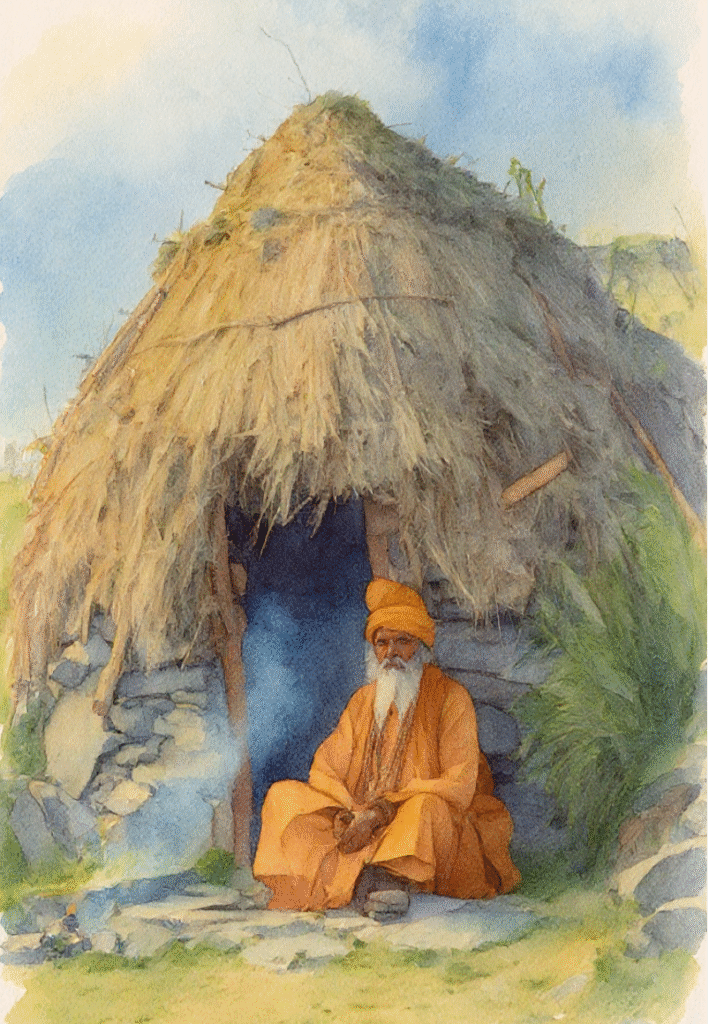
The hermit passed away after some years. But the disciple, who had become well-known as a hermit himself, continued to live there. He was widely respected.
One day at the request of some of his disciples he visited the town. A number of people came to meet him. They asked him several questions and he satisfied them with his simple answers.
A very old man, who sat listening to the hermit’s discourse, at last bowed to him and said, “O Sage, it will be a miracle if I can come anywhere near God. I have lived a rather crude life. I was the Police Chief of this town.”
“Miracles do take place, my friend! One day, I had to touch your feet. Today you touch my feet! Isn’t this certainly a miracle? If a thief could be in God’s mercy, why can’t a thief-catcher?” asked the hermit, laughing.
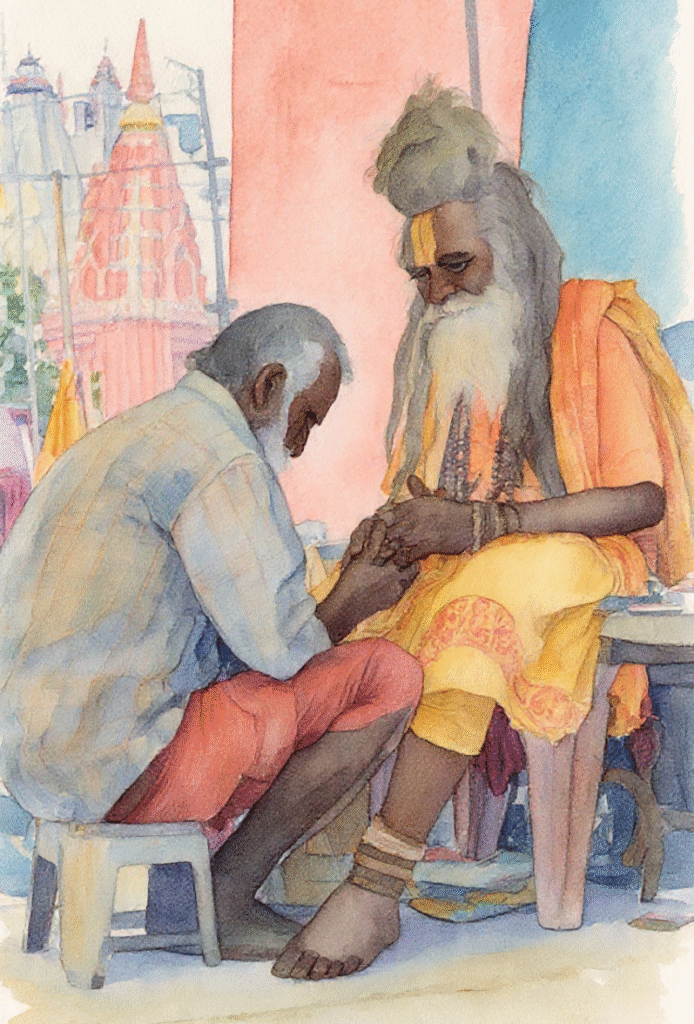
The old man sat puzzled. But the hermit did not hesitate to narrate to him the incident that had made him a hermit.
The old Police Chief hugged the hermit’s feet again and wept.
This story is an example of Indian mysticism that asserts the doctrine that a vast range of possibilities mark the life of man. Man, with his limited understanding, can never see the bigger plan of the Universe. There are many miracles in each moment, only we do not have eyes filled with wonder. We suffer when we become desperate in our desire to understand and judge ourselves, others or situations. Our life can instead become a journey towards becoming a true disciple of life. Then slowly this realization will emerge in our consciousness – that nothing is meaningless.
Sri Aurobindo in his epic Savitri writes with the exact conviction:
“This world was not built with random bricks of Chance,
A blind god is not destiny’s architect;
A conscious power has drawn the plan of life,
There is a meaning in each curve and line.”
(Sri Aurobindo, Savitri - II: The Way of Fate and the Problem of Pain)