Only His name will remain; He,
Faiz Ahmad Faiz
who is both unseen, and ubiquitous; He,
who is both the vision and the beholder.
When the clarion call of ‘I am Truth’ will ring out
– the truth that is me and the truth that is you
All God’s creatures will rule,
those like me and those like you.”
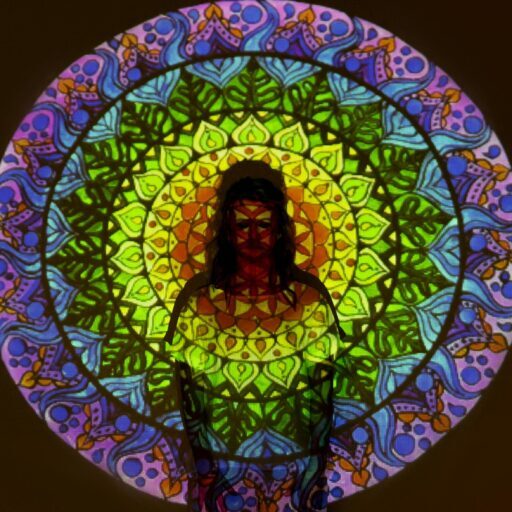
“Ana al-haqq,” or “I am the Truth” (or God) was made famous when the Sufi Master, Mansur al-Hallaj, shouted in ecstasy saying this phrase. The orthodox understood this to mean that he was claiming to be God himself, whereas he had proclaimed, in his sublime spiritual ecstasy, simply a total annihilation of himself.
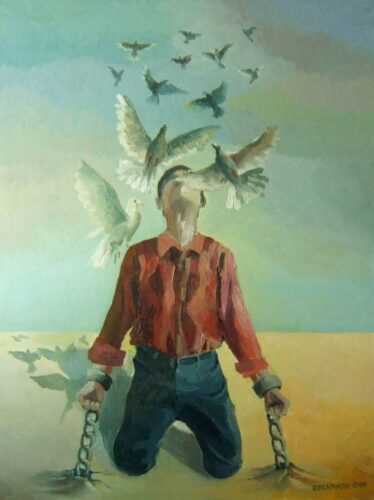
The situation in which Mansur al-Hallaj taught and wrote was shaped by social, economic, political, and religious stress, which eventually led to his arrest. He spent 11 years in confinement in Baghdad, and was finally brutally tortured and crucified. There were many witnesses who stated that al-Hallaj was strangely serene while being tortured, and sincerely forgave his persecutors. He is referred to as “Love’s Prophet.”
Today al-Hallaj is one of the most influential Sufi writers and an important character in Islamic history
He died on March 26, 922.
One can see the parallel between “An al-Ḥaqq” and Aham Brahmasmi, the Upanishad Mahavakya, which means I am (the Ultimate Reality). One can also see the similarity between An al Haq and Shivoham.
Shiva, who is a three-eyed God in Indian mythology, is considered the Absolute Truth. Shiva is the Creator and the Destroyer. Shiva’s Tandav is the Chaos which the Universe falls into from time to time and destruction becomes the only way out. It is also a popular Indian belief that when Shiva’s third-eye opens, all distractions are burned away and every kind of incomprehension is annihilated.
A short story called “The Three-eyed”, written by the Pakistani writer Asad Muhammad Khan, brings all of these elements together and weaves a story of Ainul Haq. The story uses many symbols and references from both Hindu and Muslim religious narratives. The story begins with a description of destruction and the story ends with a very similar description of destruction to show the continuous cycle of creation-destruction that the Universe goes through. Apart from the powerful imagery of an apocalypse that the writer creates at the beginning and at the end, the story is about endless “requirements” of human beings that keep piling up. Under the pressure of rising “requirements”, Ainul Haq (the Truth) is seen first under pressure and then, after losing all hope of recovery, puts an end to everything.
Here is the story in short…
An incident had changed everything. Before that incident, there used to be human habitations, and animals, trees, rivers, mountains, etc. The seasons came and went in natural cycles. Things sprouted, grew up, became old and then died. On the whole, everything was fine. Ainul Haq didn’t want to put an end to all this….
Whatever he did was done on the spur of the moment, but now there was no going away from it. This was because nothing had been left that could be arranged differently. Everything had come to an end.
Seeing the tray empty he twisted the threads of the three worlds – life on earth, the world hereafter, and the heavenly world – around his thumb and closed his fist. Then he bent a little and heaved up the burden onto his shoulders, tightened his right fist, muttered ‘illallah’ and as though he was swaying a spade in the air flung them on the earth. Then he straightened himself and stood upright, pulled out the sticking plaster that he would regularly paste on the spot of the forehead that touched the earth at the time of namaz. Then he lowered his head to glare at the ground and in all his ruthless grandeur opened his third eye and burnt down the three worlds. Nothing remained, except for smoke and ashes.
This scene of destruction had begun with a cat. One day while walking through the street he had seen it and thought of making a list. The cat was badly wounded, and it was looking very dirty with its coat dishevelled at places. Ainul Haq felt he wouldn’t be able to remember all the details if he did not write them down. So far, he used to store up things in his mind. But the number of things had been increasing constantly so that it grew more and more difficult to remember them with all their lengthy details. He was afraid of forgetting them. So he picked up a big sheet of paper and wrote 786 at the top. Then he made separate columns for the name of things, their salient features, their serial number, the things required to be done for them, and the date of entry.
Once the list was complete he could implement the actions written under the column, “requirements”. At the top of the list he entered the cat along with its qualities. In the “requirements” column he wrote that it had to be given a new coat etc., and he left the column of date of implementation vacant. At number two, he entered the case of a lady called Ruqaiyya Begum who lived alone in one of the houses of this block. She suffered from sciatic pain and sorrow and loneliness made her look absolutely worn out. In the “requirements” column he wrote that Ruqaiyya Begum must be cured of her ailment and her house must be filled in with adopted children.
Like this, Ainul Haq kept entering “requirements” of people in his record book. One after another, his list grew longer and longer.
He would then sit under the street-lamp and work through the night to complete all the entries that he had collected during the day. Now, it so happened that as he walked from one lane to another lane, sometimes he forgot one or two things and then he would have to go back to the spot again to fill in the details. And in this confusion Hamid’s leukemia remained unaccounted for. Hamid was all of one year.
In the morning, when all the entries were completed, Ainul Haq started to walk again from one lane to another. When he turned from the road towards a lane he saw that a small cradle with Hamid’s dead body, all covered in flowers, was being carried to the graveyard.
Ainul Haq turned pale. He was unsettled by this sight and started shivering all over. Shedding tears of repentance,he clasped the column of the Mosque next to the graveyard. Then he ran and ran till he reached a hill-top. Then Ainul Haq screamed out the words, ‘I had forgotten’ and that began to reverberate in the atmosphere. Then he came down from the hill and ran towards the lanes and frantically tried to store up in his mind whatever was left to be recorded.
Passing by each house he stored up in his mind the inmates along with their aspirations and their small and big disappointments. He decided to complete his entries before cock’s crow so that with the first light of dawn the process of redress might be initiated.
In the latter part of the night he reached his room and found that the lock had been broken open and his basket lying there upside down. His inventory had been stolen. Seeing the tray empty, Ainul Haq looked in all directions but did not find anything.
It was then that he twisted the threads of the three worlds – this world, the world hereafter, and the heavenly world – around his thumb and closed his fist. He bent a little and heaved up the burden on to his shoulders, tightened his fist, and as though he was swaying a spade in the air flung them on the earth. Then he straightened himself and stood upright, wrenched out the sticking plaster that he regularly pasted on the spot of the forehead that touched the earth at the time of namaz. Finally, he lowered his head to glare at the ground and in all his ruthless grandeur opened his third eye and burnt down the three worlds.