A Japanese Folktale
Chapter 1
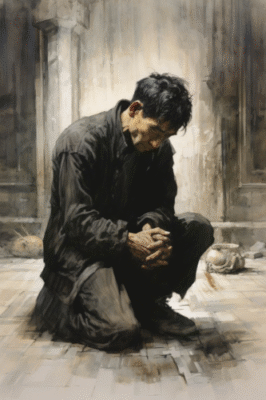
Once there was a young man. He was very poor and didn’t seem to have any luck at all. Though he tried his hand at many things and worked hard, he just couldn’t seem to get ahead.
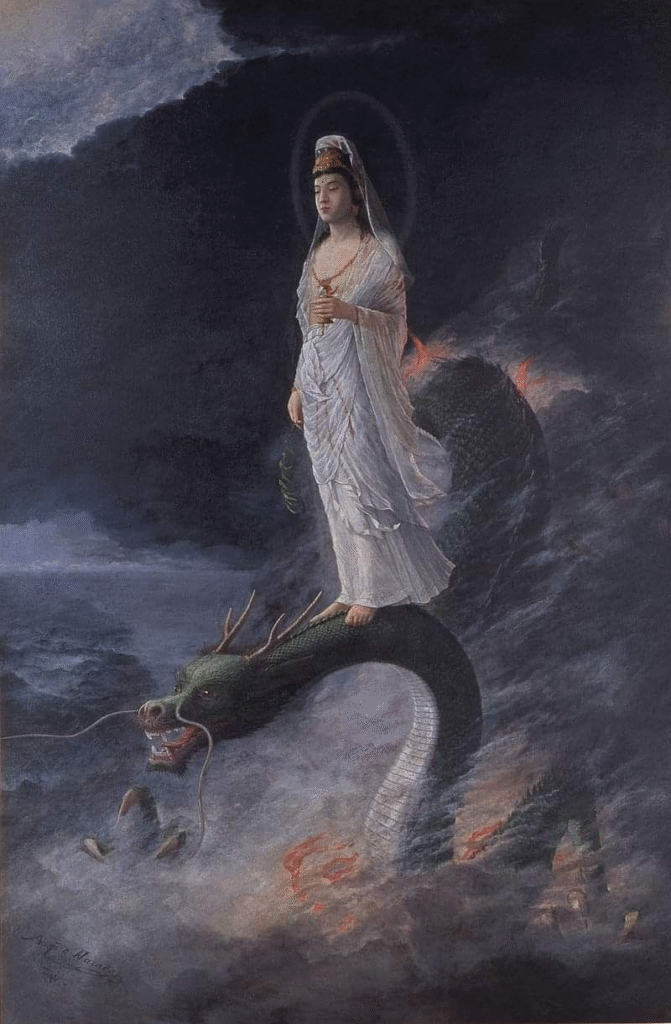
Finally he decided to test his luck one last time and went to a temple to ask Kannon for help. Kannon, the Goddess of Mercy, is one of the most beloved and widely venerated deities in Japanese Buddhism.
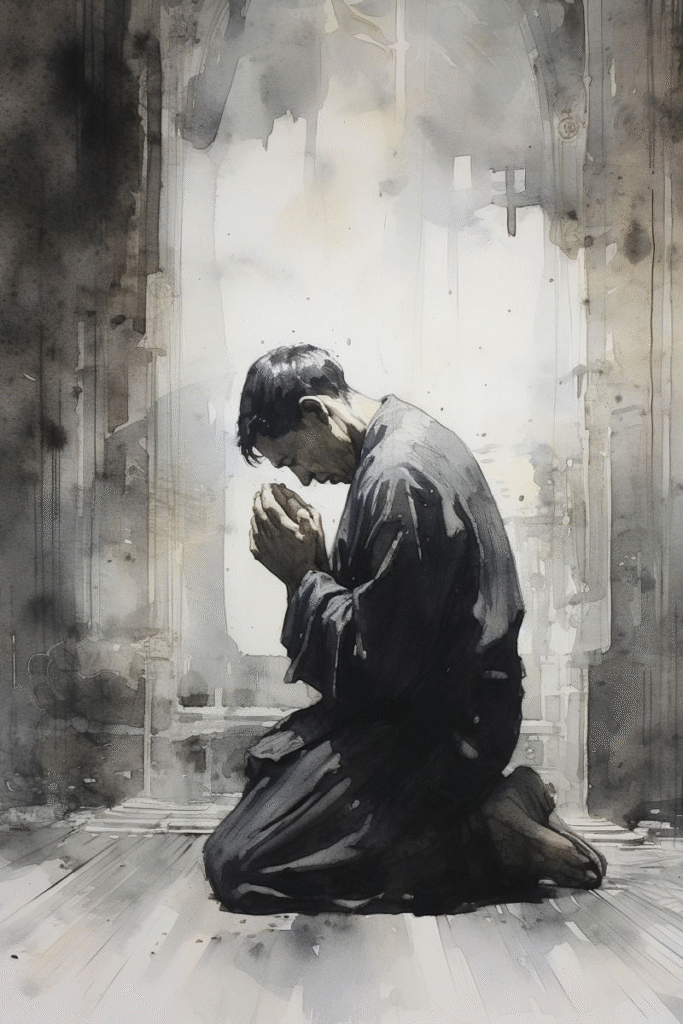
“Goddess,” he prayed, “please send me some luck! If it isn’t meant to be – if l was born to be unlucky … then just let me die peacefully …”
The poor man prayed all day and all night. When he was utterly exhausted he closed his eyes and lay down on the floor of the temple.
After sometime he heard a voice calling him: “You there! Get up!”
The man opened his eyes.
“Who in the world are you?” The man asked.
“I am Goddess Kannon. Yes, at last your luck is going to change.”
And the Goddess continued: “When you walk out of this temple you will fall on your face. That’s where your good fortune begins. As you fall, you will grab hold of something that will be of great value to you. Take it and walk towards the west. Never dream of doubting the wisdom of my words.”
Chapter 2
“I must be dreaming,” the poor man thought as he walked out of the temple. But it wasn’t a dream. As soon as he stepped outside, he stumbled and fell. And clasped in his hand he found a single piece of straw. Just then a horsefly came buzzing along, and the man caught it and tied it to the straw — something he’d often done as a child.
The man told himself, “I twisted my ankle, and all I got was one little straw. Just my luck … It might have been a piece of gold or a riceball… But I will do what Goddess Kannon had asked me to do…I will just take it and walk towards the west.”
The man hobbled off, holding the horsefly tied to the straw.
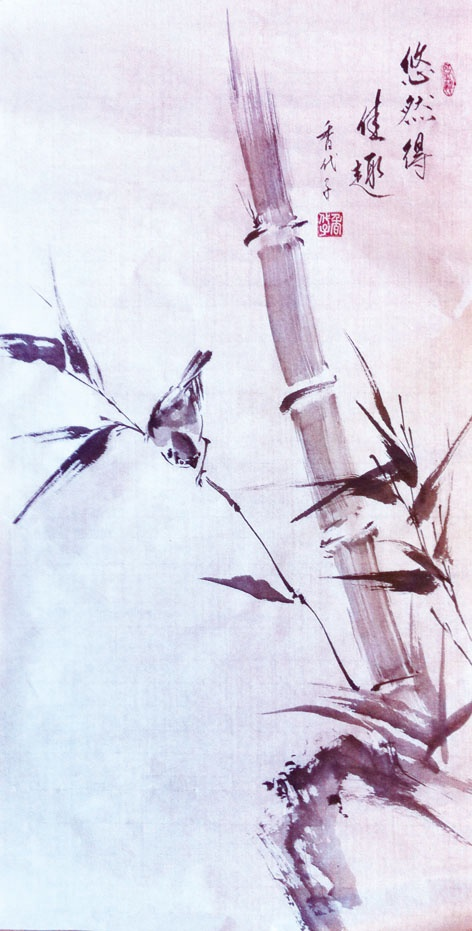
He hadn’t gone far when he met an old woman with a baby on her back. The baby was crying.
The man tried to soothe the baby. Then the baby saw the fly tied to the straw and started giggling and clapping his hands.
The man handed over the straw with the fly to the baby and the baby started playing with it.
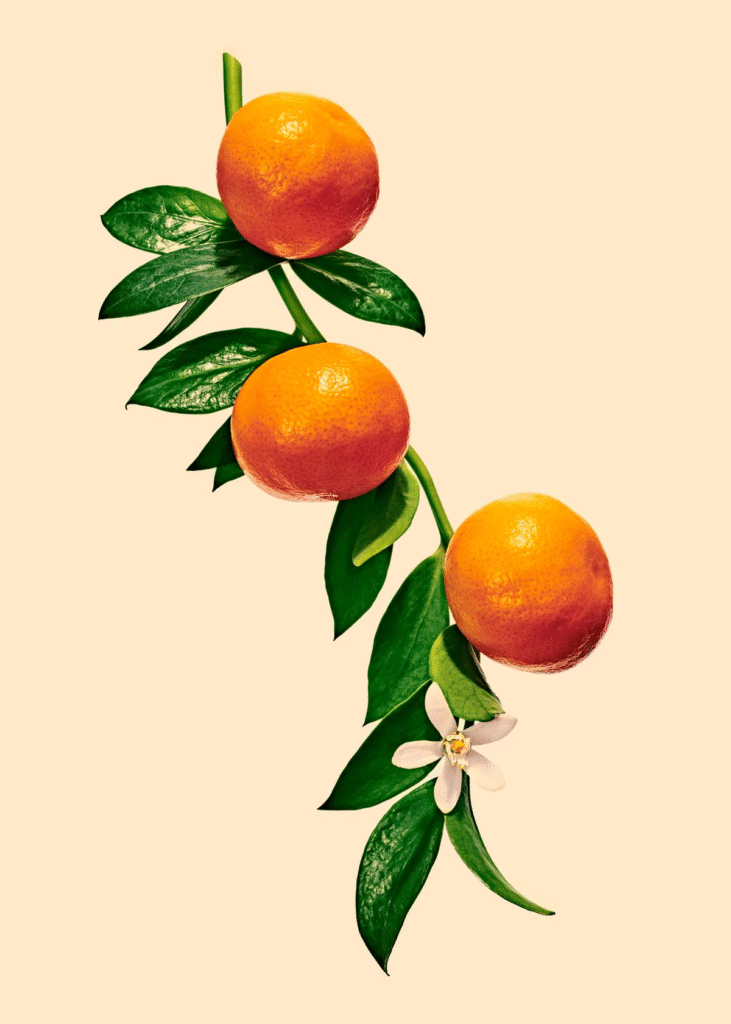
The old woman insisted on giving him three oranges in return. She said, “Please take these fruits.”
The man accepted the gift and set off again towards the west.
Chapter 3
It was hot and he was about to eat one of the oranges when he heard a moan.
Up ahead an elderly gentleman was pacing worriedly beside a young lady. She sat on the ground holding her stomach, and seemed to be in agony.
“What’s the matter, sir?” he asked.
“The young mistress has suddenly taken ill. She wants water,” the elderly gentleman replied.
The man replied, “Oh my! There’s no water around here. But wait! How about these?”
Although he’d been looking forward to eating those oranges himself, he gave them to the young lady. She ate them and almost immediately started feeling better.
Then to show her gratitude, she pressed upon the man a gift of three rolls of fine silk.
“I will never forget your kindness,” she said smiling, as she and the elderly man went on their way.
“Well, a straw became three oranges and those became three rolls of silk,” thought the man and felt as if the sun had broken through the gloom in his heart.
Now he started walking towards the west again with more enthusiasm.

Chapter 4
Then, after some time the man saw a samurai waving to him and calling him, “Hey you! Peasant! Stop right here!”
When the man came closer, the samurai said: “I will trade you my horse for that bundle of silk you’re carrying.”
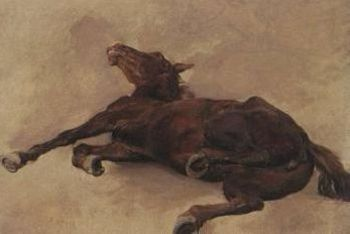
“But that horse is lying down and seems to be unwell!” cried the man.
“No he’s not, he’s just resting! Hand it over,” the samurai insisted. He tore the rolls of silk from the man’s grasp.
“Done then! Ha, ha, ha!” Saying this the samurai quickly walked away with the silk rolls, leaving the man with an ailing horse.
Chapter 5
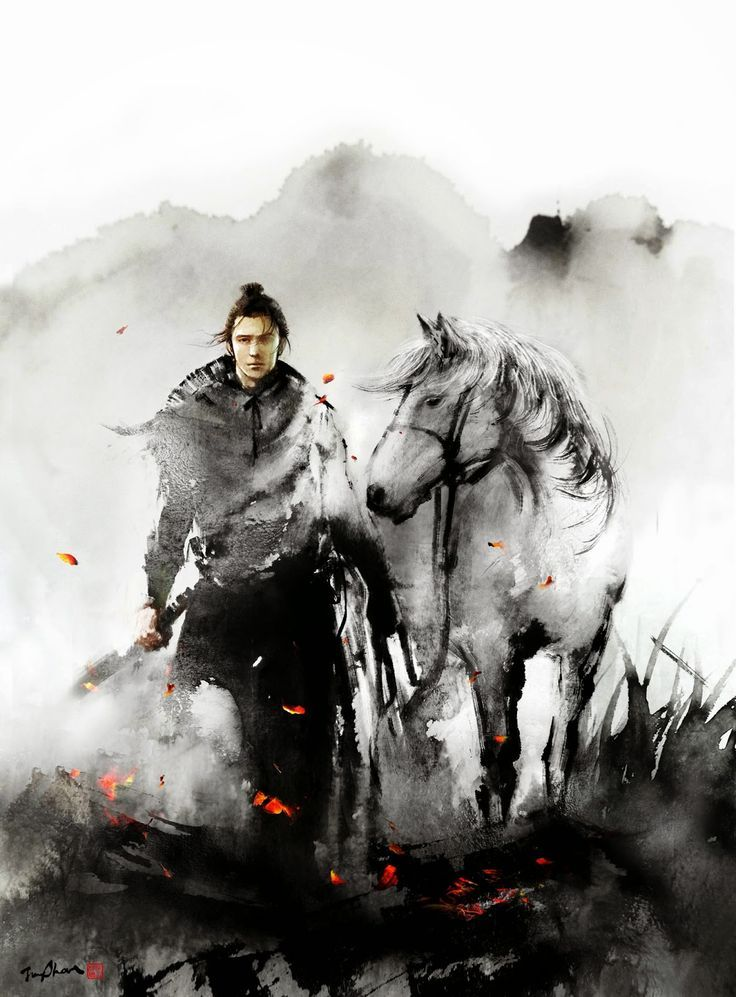
Inspite of his own misfortune, he felt pity for the horse. He couldn’t bear to leave the horse suffering there. He tried comforting him.. He stroked and massaged the animal with all the devotion of someone saying a prayer. And perhaps that prayer was answered. The horse opened its eyes and blinked. Then the horse got up and licked the man’s face.
The man was extremely happy and together they started walking towards the west.
Chapter 6
Very soon the man saw a large estate with a stable. So he called out to the guards and asked if his horse could have some food to eat.
The guards went and told the master of the house that there is a visitor at the gate asking for some food for his horse.
Now the master of the house was a wealthy merchant who traded in horses among other things. So he came to the stable to see the horse..
He took one look at the animal and gasped. “What a fine horse! One could search the entire land and not find another like it. I must have this horse. How much do you want for it, my good man? Would you take five hundred pieces of gold?”
“F-five hundred?” stammered the poor man.
“Hmm All right then, one thousand pieces of gold. And that’s my final offer.”
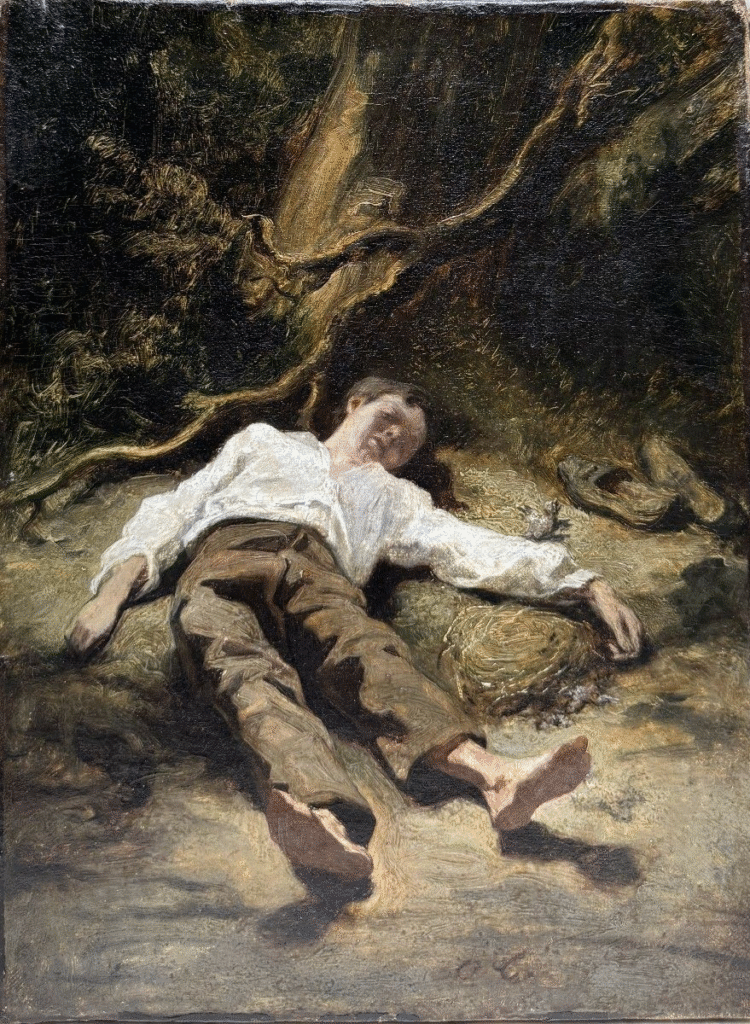
The poor man was already tired and starving. And now at this sudden turn of events, he went into a state of shock. He fainted and fell on the ground.
Chapter 7
Now the merchant was shocked. He asked his guards to carry the man inside the house. The merchant panicked and started calling his daughter frantically.
The daughter came running and now the daughter exclaimed at the sight of the unconscious poor man.
She said, “But father, this is the man who gave away the oranges he was carrying and saved my life!”
And when the man regained consciousness, her face was the first thing he saw. “Well, good to see you again,” he said shyly.
“My good fellow,” said the wealthy merchant. “I still want to buy your horse. But I have been looking for a suitable match for my daughter. And as you seem to be a good, kind-hearted man, who has already helped her earlier, I’d also like to ask you to marry my daughter and become the heir to my estate.”
The poor man blushed, and pulled the blanket over his head.
‘Oh … oh … This is more luck than I deserve!’ – the man exclaimed.
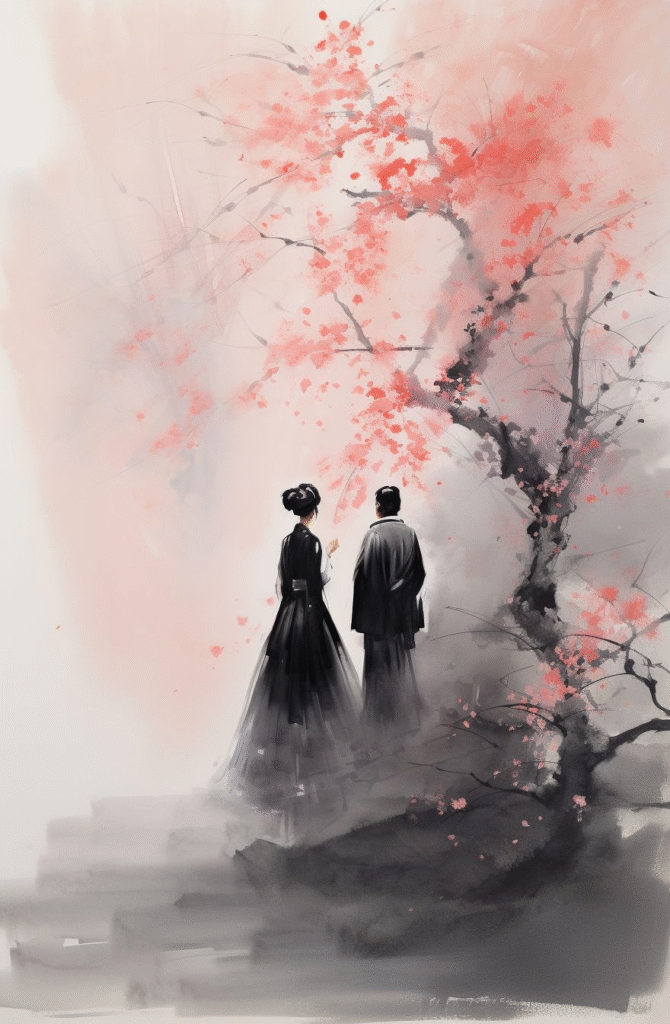
And so, by following Goddess Kannon’s instructions, the man had gone from owning one little straw, to being one of the richest men in the land. But he never forgot the goddess’s lesson: that even a piece of straw can be a thing of great value. He continued to work hard, his riches multiplied and his fame spread throughout Japan. And in the years to come, people would point to him and say, ‘There goes the one-straw millionaire!’
THE BEGINNING OF A REVOLUTION
This is a story of a humble beginning and the wisdom of truly accepting life experiences and having the aspiration to keep progressing in alignment with the will of Mother Nature.
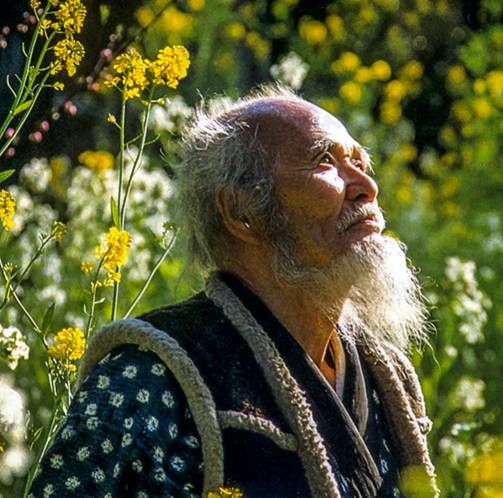
It is possible that the name of Masanobu Fukuoka’s book “ONE STRAW REVOLUTION” was inspired by this folk tale from Japan. Indeed the real revolution begins with an awakening to the truth that the path to happiness can never be about dominating Mother Nature but rather a deep and enduring happiness is found in surrendering to Her.
Fukuoka’s re-introduced “natural farming” which was long forgotten in the crowd of “experts” who created tasks after tasks in agriculture only to disturb the natural flow and balance of Mother Earth. Care of the earth essentially comes from feeling one with nature and not with any learnt expertise. The urge to manipulate nature as per our needs has no place in natural farming. He says: “When it is understood that one loses joy and happiness in the effort to possess them, the essence of natural farming will be realized.”
Just like the man in the story, Fukuoka’s own journey of “natural farming”, started with almost nothing. He only had his own personal spiritual experience through which he was shaken to the core by a realization that all the world was part of one central truth.
He took up farming as his way of living in that truth. He says in his book:
“Eventually I decided to give my thoughts a form, to put them into practice, and so to determine whether my understanding was right or wrong. To spend my life farming…this was the course upon which I settled.”
Today, the name Masanobu Fukuoka is a symbol of an agricultural revolution. He passed away in 2008. But the richness of his simple wisdom will continue inspiring many.